The Uppsala Conflict Data Program tracks armed conflict and produces valuable annual overviews in the Journal of Peace Research (as well as ongoing data on their website, including charts I often use for teaching). There are important caveats about these data and various categories of conflict and coding that need to be kept in mind (information here), but I find them extremely useful in getting a sense of where the most violent conflicts are and how they are trending.
Their 2023 summary (Davies, Pettersson, and Oberg 2023) makes for some grim reading, which I suspect will not get any better when they release their 2024 summary later this year. Though policy interest in civil wars/internal conflict has markedly decreased, they remain extremely common and important, while classical interstate conflict is also reemerging as relevant.
Some of the key findings:
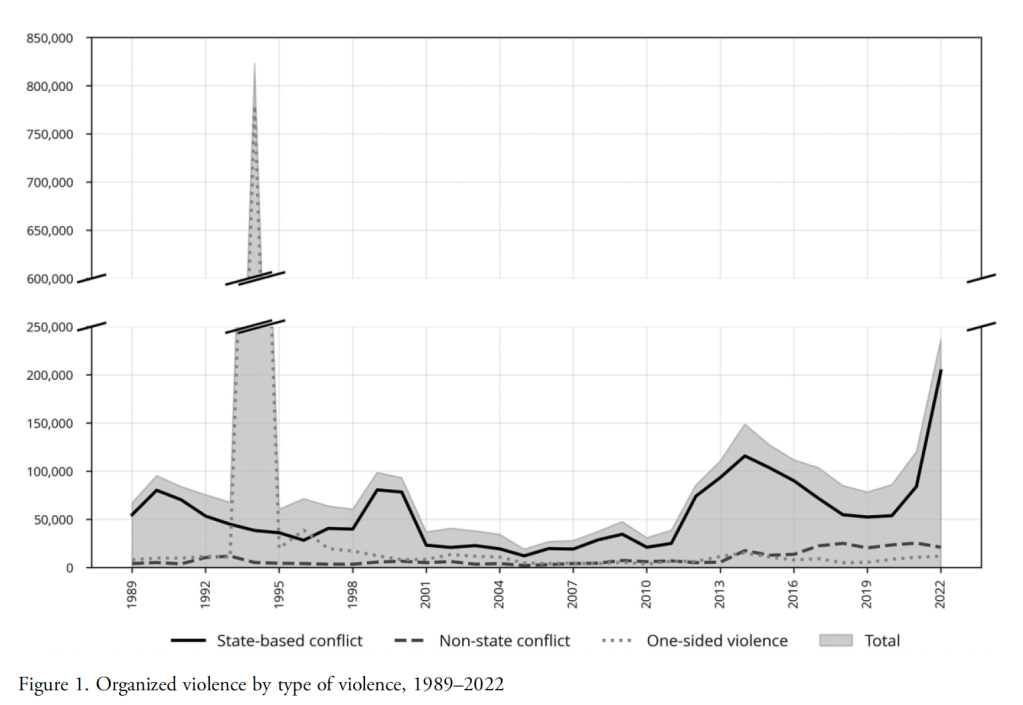
- “In 2022, fatalities from organized violence increased by a staggering 97%, compared to the previous year, from 120,000 in 2021 to 237,000 in 2022, making 2022 the deadliest year since the Rwandan genocide in 1994”
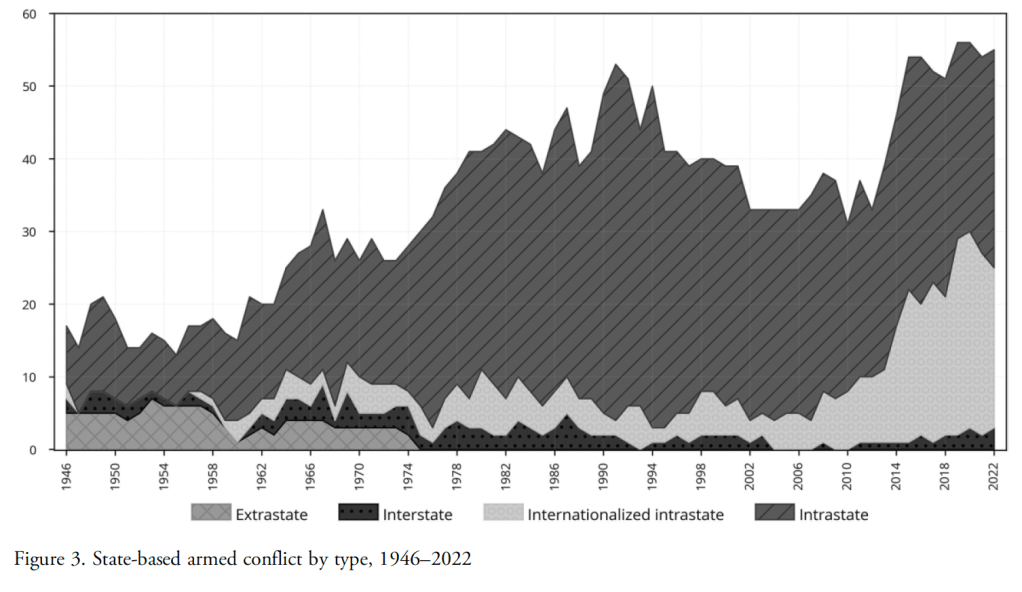
- “We have witnessed an emerging trend of increased conflict between states in the last decade, including cases where major powers support opposite sides in internationalized intrastate conflict”
- A chart of the number of conflicts:
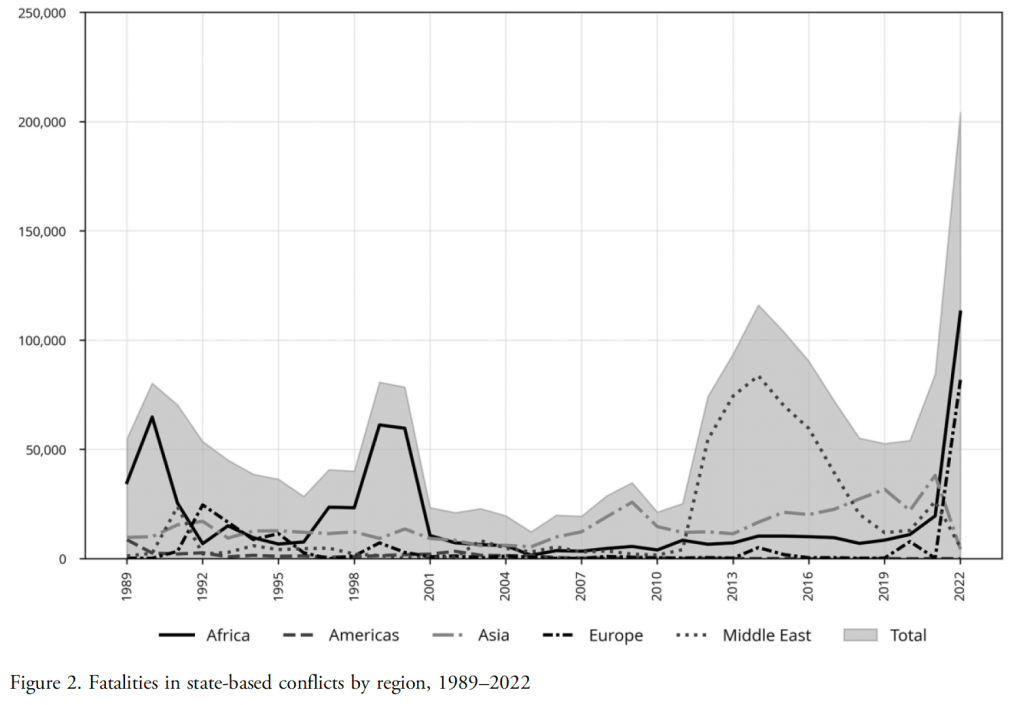
- A chart of the number of fatalities in state-based conflicts (i.e. government vs. rebels/factions):
- The continued dominance of Intrastate and Internationalized Intrastate conflicts among global conflict, though interstate wars continue to exist and matter:
- There is not great news on the “non-state conflict” front (i.e. conflicts among social groups, cartels, etc) either: “While the number of active conflicts increased from 76 in 2021, the fatalities caused by these conflicts decreased from more than 25,000 in 2021 to at least 21,100 in 2022. Yet, 2022 was one of the five most deadly years in non-state conflict since 1989, and the past nine years have witnessed unprecedented levels of non-state violence, as shown in Figure 4. Violence in Mexico and Syria has been driving this trend.”
 Paul Staniland