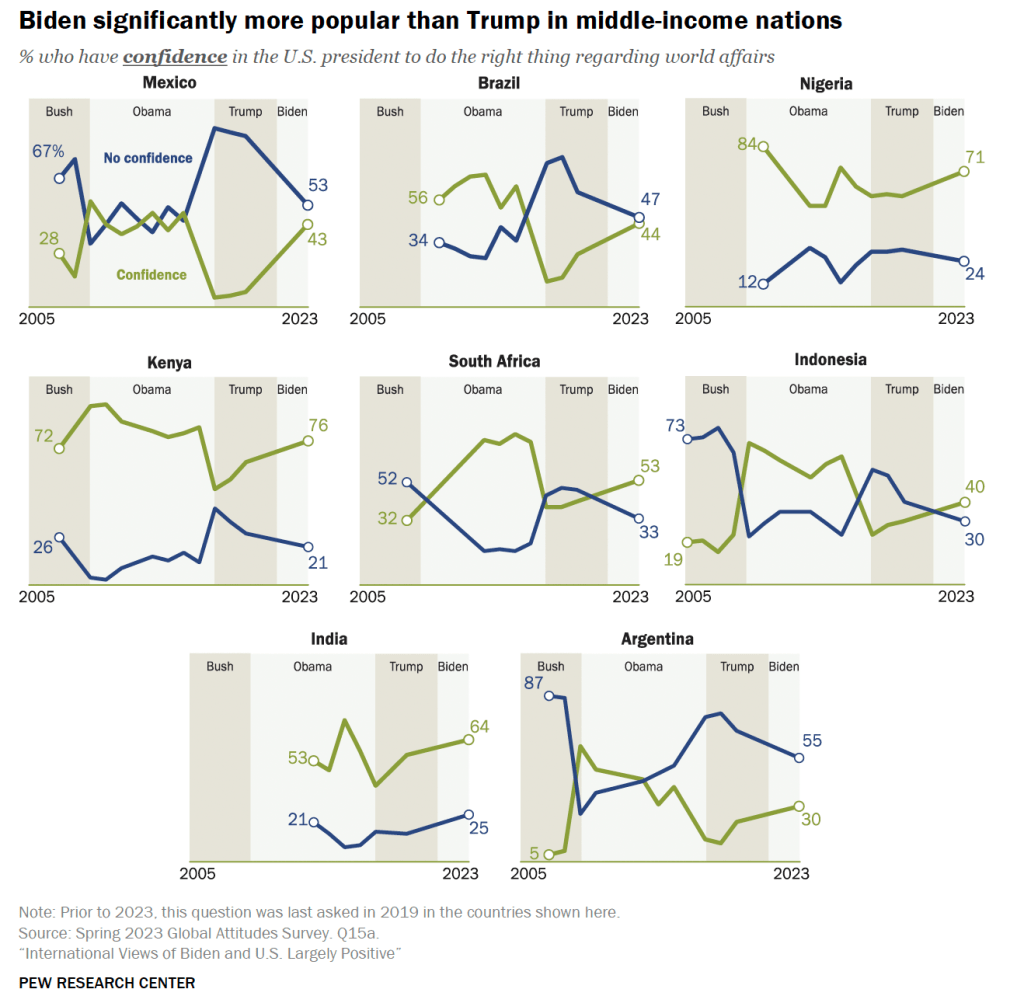
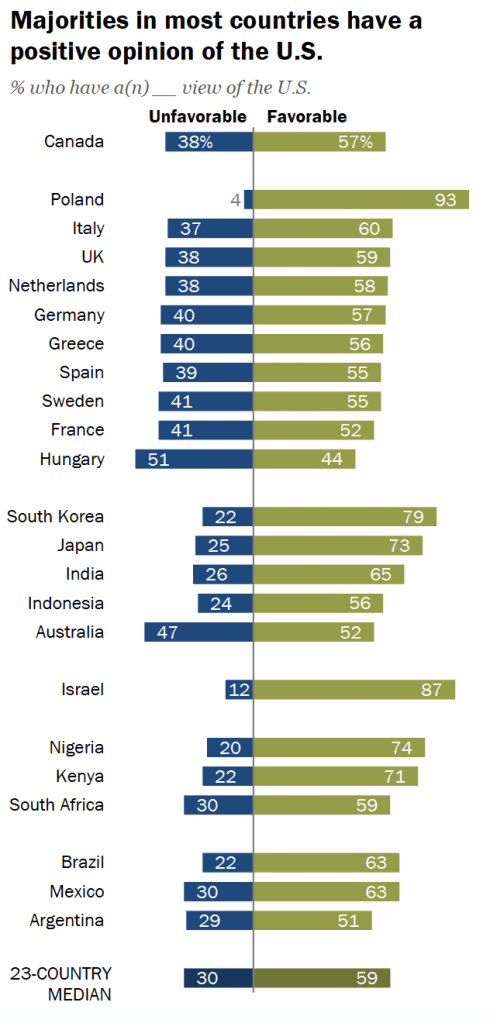
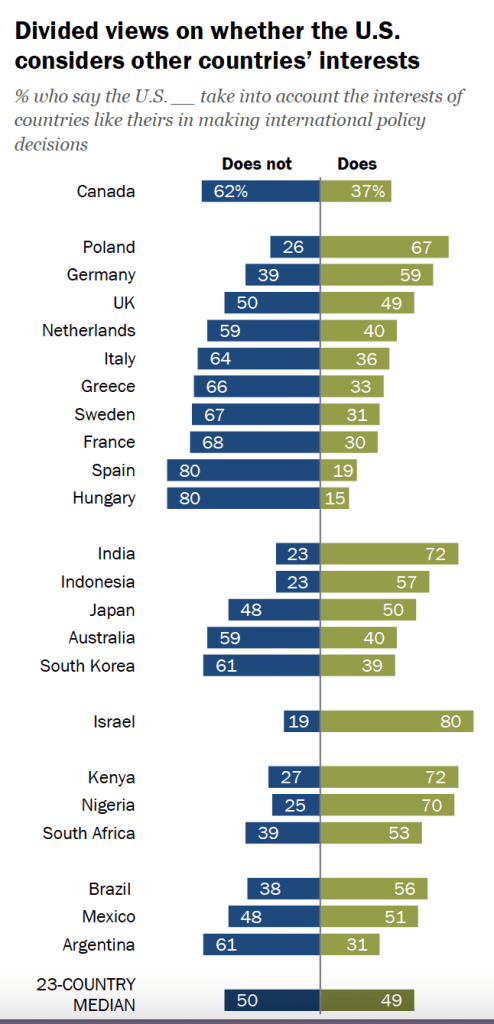
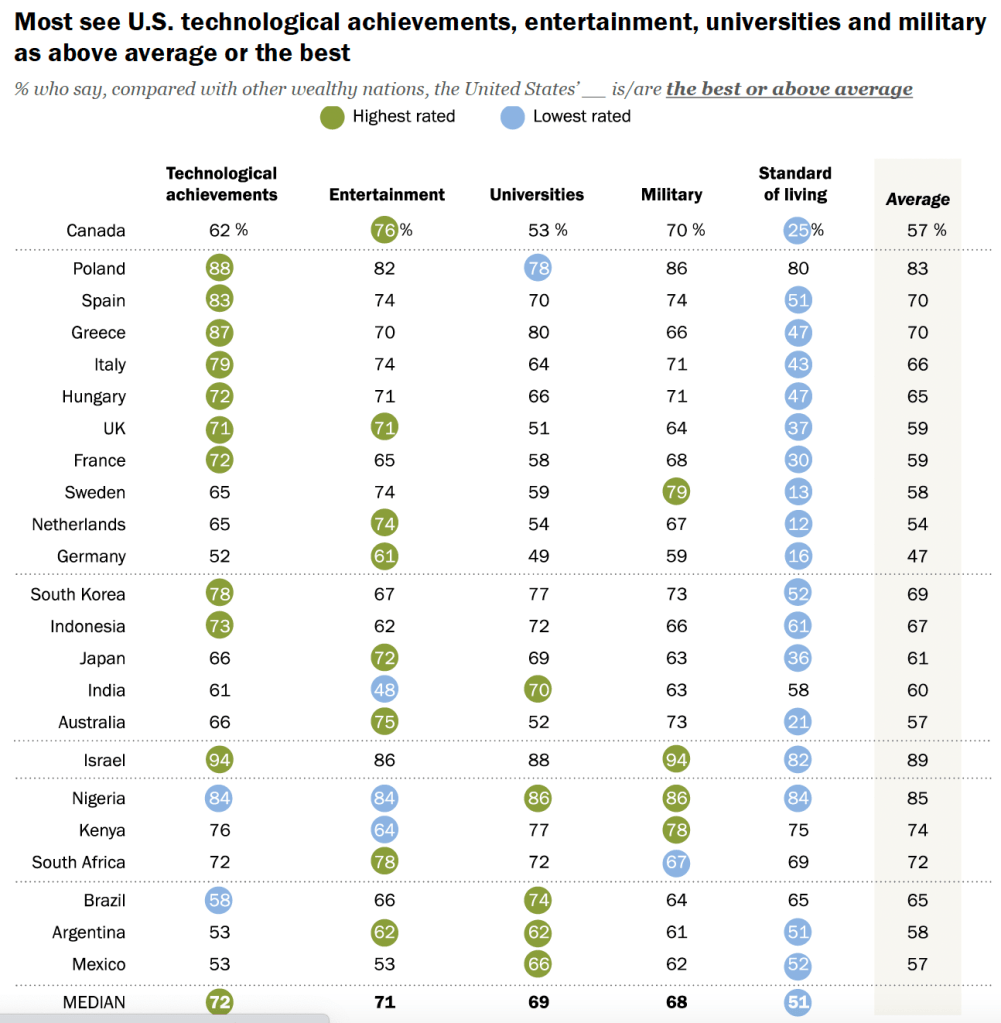
Back to the India strategy debate

A couple months ago I highlighted Ashley Tellis’ Foreign Affairs article on America’s “bad bet” on India, as well as Laxman Kumar Behera’s take. Back in January 2021, I wrote a wandering post about how it seemed like the Biden administration wanted to have it both ways in Asia (and I suspect more broadly in foreign policy) – doing well while doing good, advancing an anti-Chinese coalition that balanced power while also advancing the cause of democracy and liberalism. I suggested there was a potentially deep tension between aspects of those two goals:

“many of the countries that are looked to as either partners or arenas in which the US/”like-minded partners”* compete against China are not interested in a coalition of techno-democracies against authoritarianism, nor do they necessarily fit in any clean way into a “contest of systems” (in Twining’s words). . . .

countries don’t seem to be either sprinting toward convergence with the liberal democratic models heralded in US strategy writings, nor falling prey to the grim lures of the Bolshevik party-state. Most places are neither China nor Japan . . ..

you can easily imagine cases in which competing with China lands the US in rather normatively unpleasant situations”

I am feeling pretty decent these days about highlighting that tension. Substantively, it seems to have been largely resolved in favor of the balancing-China side of things, but still wrapped in the high-flying rhetorical mantle of the global battle against autocracy. In this vein, Dan Markey’s new Foreign Affairs piece returns to the India question, arguing that:

“To capitalize on these complementary material interests, however, the United States must dispense with the idea that shared values can provide the bedrock of a strong relationship, justifying its high tolerance for New Delhi’s behavior on the basis of a bet on long-term convergence. Rather than considering India an ally in the fight for global democracy, it must see that India is an ally of convenience. This shift will not be easy, given that Washington has spent decades looking at New Delhi through rose-colored glasses. But the pivot will encourage both sides to understand that their relationship is ultimately transactional—and allow them to get down to business. . . .

But Washington needs to cease endorsing Modi’s BJP. It must stop altruistically subsidizing the rise of another illiberal Asian giant.”

I’ve sounded some of these notes before (i.e in 2018 and 2019) so I am sympathetic to aspects the approach, though I don’t agree with all of of Markey’s points (the US, now and historically, is not exactly a model of reliable alignment and steadfast support for human rights and liberalism, and there are some nuances in Indian domestic politics worth noting).

This is where you get into a point I made in 2021:
“If you are worried about human rights and democracy as an integral part of Asia strategy, the challenge then becomes threading the needle in supporting “like-minded partners” without being actively complicit in their domestic projects”

Easier said than done. And especially in an American political/diplomatic culture in which soaring professions of virtue and eternal friendship seem to be totally taken for granted, no matter how utterly vacuous. Validator calls, retweet symphonies, and articles based on “administration sources” are all useless compared to just comparing what is being said to what is going on. It wouldn’t be the end of the world if someone in government just said true things “we don’t care all that much about the liberalism stuff, we want to sell India just a ton of weapons [Paul here: this is something that comes up every time I talk to someone from the US military], get market access for US firms, and work with them on keeping the Chinese from getting too powerful, full stop.”

Arzan Tarapore’s rejoinder to Tellis in Foreign Affairs steers entirely clear of the values stuff and in its own way seems to be broadly compatible with Markey’s when it comes to actual policy recommendations, despite radically different framing. He correctly notes that “India’s cheerleaders in Washington may conjure up unrealistic expectations” and then articulates a clear, quite specific set of areas of cooperation: the Indian Ocean, helping India figure out the best way to manage the border threat, and some degree of diplomatic coordination around particular issues. This sounds quite similar to Markey’s recommendation that the US pursue “cooperation with India must be tightly targeted to countering immediate threats posed by China.” Tarapore’s approach pares away the kind of global democracy frames that the Biden administration has doubled down on (rhetorically) since the Russian invasion of Ukraine, and offers a much less ambitious, but much more plausible, set of shared agenda items.

My uncontroversial guess is that the more US-China tensions escalate, the more India will be tightly embraced by Washington. The uncertain thing, though, will be the specific, nitty-gritty terms of the India-US bargain – in a world in which both countries are allies of convenience and India (as it should, in my view) wants to be a key player in a multipolar world, what exactly should the US and India provide each other? It’s not obvious how this specific point will play out in the years to come – the world Markey describes might as well be in a totally different galaxy than what you see folks like Atul Keshap describing and advocating. Which worldview gains power, or whether they engage with each other at all rather than living in parallel universes, will be awfully interesting from a political scientist’s perspective.

Anyways, another tangential post and now I need to go do some actual work.

Americans’ familiarity with Scholz & Modi low

For all the (understandable) attention that Germany and India receive in American foreign policy circles, public knowledge about their leaders is pretty limited. I’ll confess I’m surprised about how high the “Never heard of” is for Modi, but I guess I operate in a pretty non-representative bubble. And even Netanyahu, who has been around for a long time and operates deeply and visibly in US politics, is unknown to a quarter of Americans. From a 2023 Pew survey:

Thailand’s implications for Pakistan

There are obviously many massive differences between Thailand and Pakistan, but the recent Thai elections suggest some lessons relevant to the current military/government crackdown on Imran Khan’s PTI in Pakistan. I’m not personally a fan of Khan or his more extremely-online backers, all of whom vehemently swore up and down back in 2018 that he was not backed by the military.

But that doesn’t mean a grim wave of state repression is somehow justified, much less that it will “work” as desired. The military going after the PTI – and the government mooting the possibility of banning it – is part of an old playbook in both Pakistan and other military-influenced polities. Dawn summarizes it here:

“Indeed, the government seems to realise its vulnerable position, which is why free rein is being given to the shadow state to deal with the challenge posed by the PTI. These elements have gone about this task with signature, ham-fisted violence.”

That can be effective if you don’t plan to have free-ish and fair-ish future elections or if you think the targeted party is a pure product of patronage and malleable electables. But if those conditions don’t apply, then you “solve” a short-term problem but without an answer to the long-term question of how to build political stability.

The Thai military/monarchy exiled and sidelined various opponents over the last 20 years, but even after years of military rule that sought to lay the basis for a manageable political order (“The 2017 junta-initiated constitution with an appointed Senate was conceived as a tool by political elites to ensure their power, including over the popularly elected lower house”), the elections showed deep support for their opponents (“clear repudiation of the two military-aligned parties of the current government, and Prime Minister Prayuth Chan-ocha, who led a coup that ousted an elected government in 2014. The governing coalition won only 15% of the seats”).

As Tamara Loos argues:

“Many new voters who grew up during the tumultuous 2000s and many older voters frustrated with the static invariability of Thai politics cast their ballots in May for orange: the blend of yellow and red adopted by Move Forward in its campaign. . ..

If Move Forward is unable to build a ruling coalition, other major parties could form a government in its stead, a development that would likely trigger protests, which the military could distort into a pretext to stage a coup. If Move Forward’s coalition tries to reform Article 112, the Election Commission could dissolve the party and its partners, which would also catalyze popular dissent, and the military could stage a coup. If a coalition government fails to broach discussion of Article 112, Thais may stage peaceful protests, which could then invite the military to stage a coup.  .. .

This distressing pattern persists in Thai politics: when events or protests threaten the power of the military-monarchical status quo, the military uses the disruption as an excuse to stage a coup, crack down on dissent, and eventually hold elections for a new government, which rules until its power is threatened anew. “

This means it’s not at all obvious to me what the endgame is in Pakistan. The PTI has plenty of peelable-away electables, leaders able to be pressured, and a complex electoral coalition that will prove vulnerable. But it’s also a representative of a meaningful portion of the Pakistani polity. Both things can be true at once. The PPP and PML-N are around even after past military crackdowns, the Awami League was still able to become a major player in Bangladeshi politics even after the 1975-1990 military interregnum, and the Thai opposition has found a new voice despite years of military management. If Myanmar’s military somehow stepped aside tomorrow, the NLD and other pre-2021 coup parties would still be key players.

Mass politics just aren’t easily malleable, which is why military regimes struggle so badly to build and maintain stable rule. The key question is thus whether and how this constituency will be incorporated; there is certainly the possibility that the PTI or something like it sweeps back to power in future elections, heralding another potential crisis.

The unipolarity question

Foreign Affairs did one of its “ask a bunch of people” polls, asking respondents to evaluate the statement “The global distribution of power today is closer to being unipolar than it is to being bipolar or multipolar.”

I came down as a Disagree, Confidence 5. I’m not confident about any predictions or claims about the world above a certain level, but it seems hard to really see the contemporary international system as closer to unipolarity than to something else. I wrote:
“There is no doubt that the United States retains huge power advantages in the international system. But it’s also the case that countries like China and India have dramatically greater power in particular regions and issue areas than 20 or 30 years ago.”

My University of Chicago Political Science colleagues John Mearsheimer and Paul Poast also came in on the Disagree side of things, though in John’s case, perhaps unsurprisingly, with dramatically greater confidence and lack of waffling, for better and worse.