For the last year or so, Milan Vaishnav and I have been fortunate enough to ask a set of insightful contributors to write essays on the politics of opposition (very broadly defined) across South Asia as part of a Carnegie Endowment for International Peace project. We’ve now compiled them into a single volume, and added our own introductory essay, available here on the Carnegie South Asia Program site. The full publication in PDF form can be found here.
Hiding. May 7, 2021.

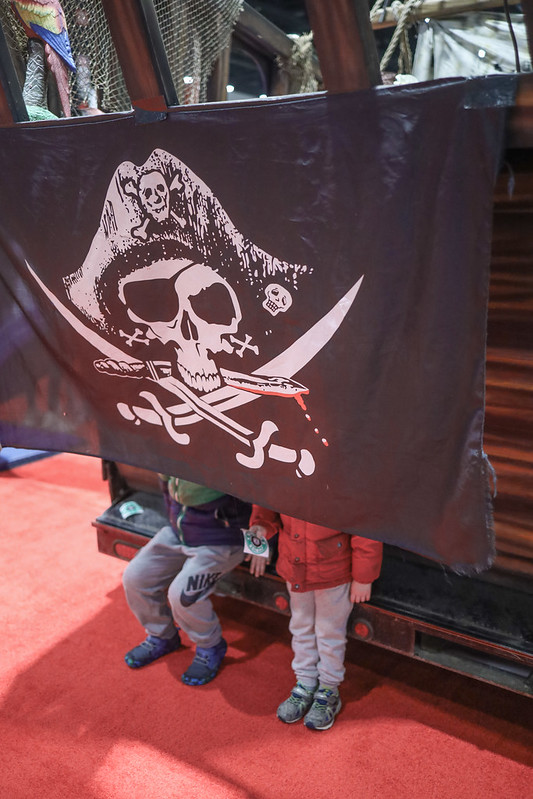
Fly the Jolly Roger. January 14, 2023.
Nepal’s political state of play
This article by Santosh Sharma Poudel in The Diplomat is an excellent breakdown of who the players are and where they stand after Nepal’s 2022 general election. It’s a couple weeks old so doesn’t include the most recent developments (like the vote of confidence in the parliament a week or so ago) but is extremely valuable as a big-picture overview of the results of both the election itself and the consequent coalitional wrangling that have returned Pushpa Kamal Dahal (Prachanda) as PM for the third time.
Game-winner. January 15, 2023.
Brandeis squeaks by UChicago with a game-winning three-pointer with 5.8 seconds left, to win 66-65.


Cloudgate (i.e., “The Bean”). January 17, 2022.

Responses to China in Taiwan and South Korea
Fascinating new article by Christopher Carothers in Foreign Policy Analysis that explores how historical conflicts and perceptual differences among political parties shape their responses to external threats:
Since 2009, China’s growing geopolitical assertiveness has triggered or exacerbated conflicts with many of its neighbors. External threat is often believed to produce domestic cohesion, such as bipartisanship or a rally-‘round-the-flag effect. However, this study uses the cases of Taiwan and South Korea to show that political parties have sometimes united around a response to Chinese pressure but at other times have been sharply divided. Despite Beijing’s aggression toward Taiwan since 2016, the Kuomintang and the Democratic Progressive Party remain at odds over cross-strait policy. In contrast, South Korean conservatives and progressives united in response to Chinese economic sanctions over the deployment of Terminal High Altitude Area Defense. I argue that a country is less likely to unite against a foreign threat when a “formative rift” in its history divides political groups over national identity issues and causes them to perceive the threat differently, as in Taiwan but not South Korea. This study is based on a multilingual analysis of Taiwanese and South Korean political parties’ statements on China policy. Its findings contribute to scholarship on how international factors affect domestic politics and our understanding of China’s rise.
Church and Moon. December 27, 2022.

Origins of leftist rebel groups
This is a very interesting new article by Megan Stewart, “Foundations of the Vanguard: the origins of leftist rebel groups,” European Journal of International Relations:
“What explains the emergence of leftist rebel groups? I provide one explanation for their origins in colonized and recently decolonized countries during the Cold War. In this context, I argue that imperial assimilatory education programs terminating in the metropole facilitated the rise of a would-be rebel leadership cadre committed to leftist ideas and connected to leftist activists, and this cadre ultimately made the formation of a leftist rebel group more likely. Relying on archival and primary materials, I focus on variation in educational experiences of rebel leaders in Eritrea’s Independence War to qualitatively evaluate different explanations for the formation of groups with different ideologies. I probe generalizability quantitatively with a global sample of civil wars, as well as qualitatively with an overview of cases colonized by Portugal using archival data from three countries.”
Georgia sky. December 21, 2022.

 Paul Staniland