This is a useful resource from CSDR in Delhi giving a timeline of the Pahalgam/Sindoor crisis.
2 recommended podcast episodes
I spent the last several weeks very intently following India-Pakistan tensions and then clashes; I even seriously re-engaged with Twitter/X, which is the only social media game in town for South Asia.
Stepping back a little bit, I want to recommend two podcast episodes from different parts of the Carnegie Endowment universe that try to give a big picture on different aspects of Indian foreign policy in this new era:
- Grand Tamasha – just out, Milan Vaishnav interviews Chris Clary on what happened in the India-Pakistan clashes of May 2025, what we might be able to learn from them, and possible futures for the subcontinent.
- Interpreting India – from October 2024, Vijay Gokhale and D.B. Venkatesh Varma offer an overview of how India will try to navigate its “multi-alignment” strategy in a rapidly changing world. It’s a little out of date obviously, but highlights key questions that have come into sharp relief as India tries to deal with a Trump foreign policy that seems, at least in recent weeks, to be embracing unpredictability and fluidity (including, unexpectedly, on India-Pakistan relations at least rhetorically).
“The Pahalgam Abyss”
A grim, thoughtful piece by Pratap Bhanu Mehta in the Indian Express after the Pahalgam terrorist attack. Some excerpts:
“The horrific killing of tourists that has left the meadows of Pahalgam stained with the blood of more than two dozen corpses produces a sickening sense vertigo — like the fall of the falcon, “turning and turning in the widening gyre,” to borrow W B Yeats’ metaphor. The moral issue in this attack is clear. There are no root causes, no mitigating circumstances, that can contextualise its enormity. People were targeted for their religion. . . .
But the tragedy of the moment is that the bloody frontier this act in Pahalgam has drawn will still shadow our political destiny, whichever way we act.. . .
The Pakistani army has not, for a long time, had an even minimally imaginative view of the country’s future. Its greatest strength is not honourable negotiation with adversaries. It is proxy wars, the use of chaos and terror to substitute for its strategic failures and dalliance with religious fundamentalism. The problem with such a state is that it is not clear what counts as deterrence or punishment. At best, it positions itself for tactical reprieves . . . .
ut the point of the attack seems to be to underscore Kashmir’s vulnerability: How fragile any sense of normalcy will be so long as a combination of Pakistan and some home-grown militancy remains a feature of the political landscape. Speaking in instrumental terms, the securitisation of Kashmir will again deepen, pushing the state towards the vicious circle out of which it has struggled to emerge . . . .
what it more subtly does is reinforce the idea that so long as India remains besieged by states like Pakistan, with weaponised religious identities, the 1947 modus vivendi of a secular India is no longer viable. Either the logic of 1947 must be completed, or it must be undone. This is the dominant mood in contemporary India. The consequences of either option are too dire to contemplate. The falcon of peace and secularism is in free fall, and there is no falconer to whose call it can respond”
Spring (slowly) arriving. April 18, 2025.

USIP, the Wilson Center, and the Politics of Wrecking
I recently received this email from Nate Cavanaugh, listed as the “Acting Chairman and President” of the United States Institute of Peace (USIP):

It cancelled a contract for a special report I’d been working on with USIP. The report was mostly finished and very little money remained to be paid, so few savings will go to the taxpayer. But it was a tiny part of the much broader destruction of the USIP by DOGE and the Trump administration. This contest is still locked up in legal battles, but regardless seems to have cut a broad swath through the institution. Even the website has been taken down.
Now the Wilson Center is being de facto eliminated as well; it’s announced that it is shutting down its programming and activities. In addition to firing the vast majority of its staff, I assume it will end the Cold War International History project that provides fascinating insights from translated primary documents, archive or delete the website and its publications, etc, just like USIP.
As a result of these moves, a number of most publicly engaged Asia policy analysts in the US have been fired (plus other regions/topics of course; I know the Asia side best). USIP had a large and excellent Asia Program, which included a rich roster of people and publications on Afghanistan, India, Pakistan, Myanmar, Bangladesh, and various other states in the region. I believe – though with the website down it’s hard to count people now, so I could be wrong! – USIP was the single densest concentration of full-time South(-ish) Asianists in DC outside the US government. The Wilson Center has experts on South Asia, Myanmar, and the Indo-Pacific.
In addition to the loss of experienced researchers, these were places where young people would go as RAs, interns, or program officers to build up subject matter skills. USIP also helped to fund doctoral students’ research in the Peace Scholar program (I was a Peace Scholar in 2009-10, as have been a number of my students since).
The freely available publications produced by USIP and Wilson will no longer be produced. The USIP publications have been stripped from the internet already, so no one will be able to benefit from them now or in the future. This is a sample of the kind of work they produced, courtesy of the Wayback Machine – it’s obvious how relevant these topics are.
There’s no point to any of this beyond performative wrecking; the budgetary savings will be minuscule compared to the tax cuts working their way through Congress, and efficiencies obviously could have been achieved without institutional annihilation. DOGE seems to be flailing about for politically-weak things to kill while failing to achieve its broader goals. The result is to destroy much of a crucial layer of analysis and expertise that lies between 1. intra-government work that is not publicly accessible (and apparently controlled by Laura Loomer), and 2. specialized, often niche academic work that primarily speaks to other scholars.
Both government and academic work are valuable, but wiping out much of the in-between space will make both worse-off. Organizations like USIP and Wilson provided real expertise to both official and non-official audiences, could support projects with a longer time horizon than is often possible within the government, and were far more accessible to the public than most scholarly research.
Combined with eliminating or reducing social science and area studies research funding in other contexts (plus slicing the State Department), the administration seems intent on limiting home-grown American knowledge about the rest of the world. Policymaking shouldn’t be handed over to experts; the “best and the brightest” get plenty wrong, and choices often come down to hard judgment calls rather than clear technocratic answers. But it’s generally better to have more information and analysis rather than less. Administration officials talk a big game about waging major power competition with China – and then gut the places that produce data and analysis and eliminate the programs that could be sources of influence.
Former CIA deputy director of operations (1959-62) Richard Bissell noted in his posthumous memoir – quoted in William Rust’s excellent Before the Quagmire about Laos – that if he and other government leaders had “shown more open-mindedness . . . the advice and perceptions of experts on Laotian politics, history, and culture might have received more attention,” and the US government could have avoided a set of huge policy mistakes. It’s rare that in retrospect US foreign policy failures turn out to be the result of listening too carefully to area specialists. Avoiding rule by experts doesn’t imply destroying all expertise, nor does pursuing efficiency require gutting valuable institutions for a pittance of savings.
Nepal’s pro-monarchist political forces
Nepal recently experienced deaths as a result of pro-monarchy rallies. The Nepali monarchy was abolished as part of Nepal’s post-civil war transition to a secular republic. While monarchist sentiment in the 21st century is not especially common around the world (Thailand and a few others being exceptions), Nepal’s political and economic struggles, the various political cleavages that endure within the country, and spillover from Hindu nationalism in India (the Nepali monarchy was Hindu) all have sustained a constituency in Nepal for monarchism.
Amish Raj Mulmi is one of my favorite analysts of Nepal’s politics, and he has a valuable essay in Himal on this issue:
“Gyanendra and Nepal’s royalists had so far taken pains to maintain civility, but that pretence is now gone. The limited but not insubstantial public sympathy they had gathered – helped by deep popular anger with Nepal’s current political leaders – has dissipated.
Nepali commentators see the resurgence of royalist forces as a symptom of increasing discontent with the country’s political and economic status quo. Nepal’s economy has not fully recovered from the ravages of the pandemic. Thousands of young Nepalis leave the country every single day for better economic opportunities abroad. None of the country’s political parties – including the main establishment forces currently sharing power, the Communist Party of Nepal (Unified Marxist–Leninist) and the Nepali Congress – have shown any inclination for much-needed structural reform. Instead, crony capitalism is rampant, as is corruption. . . .
Yet for all the present anger, on almost every indicator – economic, social or political – Nepal is doing better than it ever did under the monarchy. In 1995, at the peak of the era of constitutional monarchy, 55 percent of Nepalis lived in extreme poverty. That figure had dropped to less than 0.5 percent in 2023. Although Nepal’s economy grew slower between 1996 and 2023 than those of most Southasian countries, personal incomes have risen for all demographics. Local governments have shown a clear preference towards decentralisation. There is freedom of speech on a scale unheard of under the monarchy.
Why, then, are some sections of Nepali society nostalgic about royal rule?
ONE COULD DIVIDE those leading the call for the monarchy’s return into five categories.”
Read the whole thing to learn about his categorization of the monarchist and monarchist-curious forces in the Nepali political system, their relationship to India, and the state of contemporary Nepali politics.
Saturn V. March 23, 2025.

Caribbean sunset. March 27, 2025.

Spelling Bee. March 13, 2025.
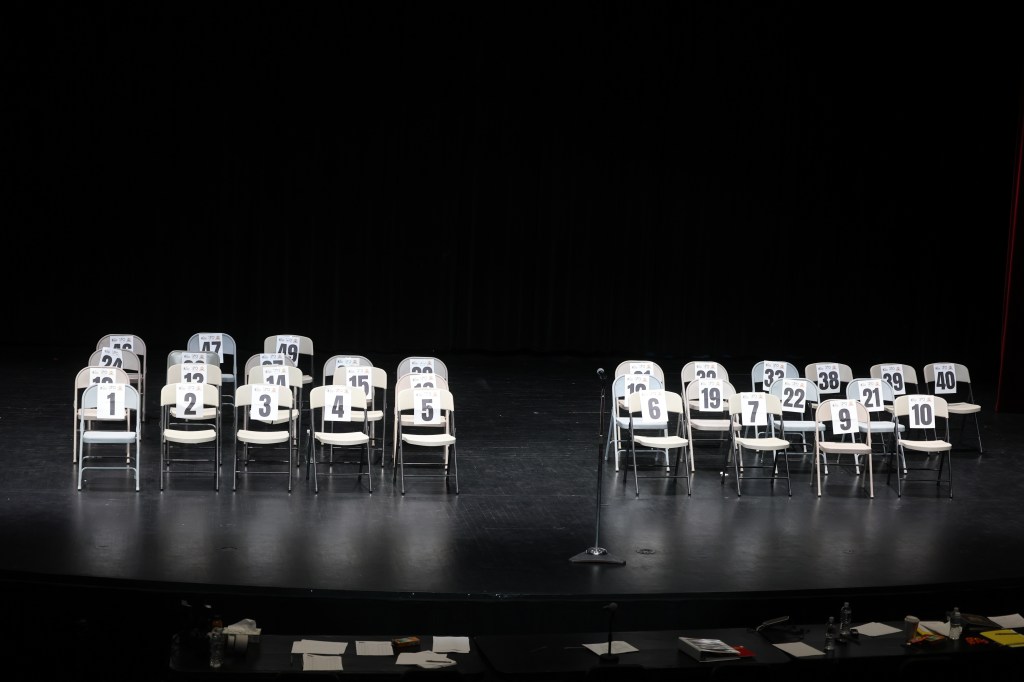
(for an article about the bee, see this Sun-Times article)
Some initial citations for understanding 1945-1962 Laos
I’m spending a lot of time right now understanding Laos’ fairly quick descent into militarized polarization during the early Cold War, which occurred much faster than in Cambodia. This is not a case I knew anything about prior to starting the work, so it’s been a really rewarding and interesting experience to hit something genuinely new.
Below are a few books I’ve found useful (with deep debts to the H-Diplo roundtable review of Seth Jacobs’ The Universe Unraveling as a guide):
Christopher E. Goscha and Karine Laplante, eds., L’échec de La Paix En Indochine/The Failure of Peace in Indochina: 1954-1962 (Paris: Les Indes Savantes, 2010)
Martin Stuart-Fox, A History of Laos (Cambridge, U.K. ; New York, NY, USA: Cambridge University Press, 1997)
MacAlister Brown and Joseph Jermiah Zasloff, Apprentice Revolutionaries: The Communist Movement in Laos, 1930-1985 (Hoover Institution Press, 1986)
William J. Rust, Before the Quagmire: American Intervention in Laos, 1954-1961 (Lexington, Ky: University Press of Kentucky, 2012)
Nicholas Tarling, Britain and the Neutralisation of Laos (Singapore: NUS Press, 2011)
Martin Stuart-Fox, Buddhist Kingdom, Marxist State: The Making of Modern Laos, 1st ed, Studies in Southeast Asian History, no. 2 (Bangkok ; Cheney: White Lotus, 1996)
Arthur J. Dommen, Conflict in Laos: The Politics of Neutralization, Rev. ed (New York: Praeger, 1971)
Søren Ivarsson, Creating Laos: The Making of a Lao Space between Indochina and Siam, 1860-1945, Nordic Institute of Asian Studies Monograph Series 112 (Copenhagen S, Denmark: NIAS Press, 2008)
Jacob Van Staaveren, Interdiction in Southern Laos, 1960-1968: The United States Air Force in Southeast Asia (Washington, D.C: Center for Air Force History : For sale by the Supt. of Docs., U.S. G.P.O, 1993)
Lawrence Freedman, Kennedy’s Wars: Berlin, Cuba, Laos, and Vietnam (New York: Oxford University Press, 2000)
Vatthana Pholsena, Post-War Laos: The Politics of Culture, History, and Identity (Ithaca, N.Y: Cornell University Press, 2006)
William J. Rust, So Much to Lose: John F. Kennedy and American Policy in Laos, Studies in Conflict, Diplomacy, and Peace (Lexington, Kentucky: University Press of Kentucky, 2014)
Seth Jacobs, The Universe Unraveling: American Foreign Policy in Cold War Laos, Illustrated edition (Ithaca: Cornell University Press, 2012)
Jane Hamilton-Merritt, Tragic Mountains: The Hmong, the Americans, and the Secret Wars for Laos, 1942-1992 (Bloomington: Indiana University Press, 1993)
Charles A. Stevenson, The End of Nowhere: American Policy toward Laos since 1954 (Boston: Beacon Press, 1972)
Qiang Zhai, China and the Vietnam Wars, 1950-1975, First Edition (Chapel Hill: The University of North Carolina Press, 2000)
Ryan Wolfson-Ford, Forsaken Causes: Liberal Democracy and Anticommunism in Cold War Laos (University of Wisconsin Press, 2024
 Paul Staniland